


CTRL Panel
I’m stepping in for this week’s introduction while Anders is out on holiday. He’ll be back in your inbox with another roundup on May 13.
Our work centers on two themes:
Simulations of Mastery & Purpose
Simulations of Connection & Belonging
Here’s an example of each:
Prediction markets: gambling disguised as investing
“Sports event contracts serve no economic purpose beyond entertainment,” writes our colleague Jonathan D. Cohen in his public comment to the Commodities Futures Trading Commission.
And yet wagering on sports event contracts is regulated as an investment and available on Robinhood, a brokerage app, where young men could be investing in their future rather than gambling on sports.1 A new paper, detailed below, finds that 70% of prediction market users lose money, while 84% of all gains are captured by the top 1%. That sounds like a bad gamble, and a worse investment.
AI-generated pornography
The 25-year decline in dating and sex has coincided with the rise of ubiquitous pornography2 — from pixelated images, to five-minute clips on tube sites, to paid OnlyFans subscriptions, and now AI-generated pornography. A few recent papers offer a glimpse into the newest platforms, though we still lack rigorous data on prevalence and impacts.
Valerie Lapointe and colleagues studied 98 AI-porn platforms. 90% prohibited some content generation; 65% prohibited child sexual abuse material; 55% prohibited depictions of real people; just 25% prohibited nonconsensual activity. Governance and enforcement vary widely.
Nicola Döring et al. examined Reddit posts about AI pornography from August 2024. Most users described fun and fascinating experiences; a minority voiced concerns over excessive use, addictiveness, and warped dating and sexual expectations. Others expressed shame and anger about nonconsensual deepfakes, especially of friends and family.
Finally, Alejandro Cuevas and Manoel Horta Ribeiro study the impact of the TAKE IT DOWN act from May, 2025, which criminalized the publication of nonconsensual intimate imagery and deepfakes. Analyzing activity on 4chan and two anonymized sites, they find that activity stayed at or above the counterfactual, with increases in sharing, in requests for new content, and in some cases new contributors—suggesting that the new law did not reduce nonconsensual deepfake activity overall but coincided with its redistribution to other platforms.
Desiring economic stability and human relationships
In multiple surveys, young men name economic independence and healthy relationships as their top priorities. They also report economic anxiety driven by AI's effects on the workforce, and describe dating as fraught. Meanwhile, they encounter the simulation of investing in prediction markets and the illusion of intimacy in AI-generated pornography.
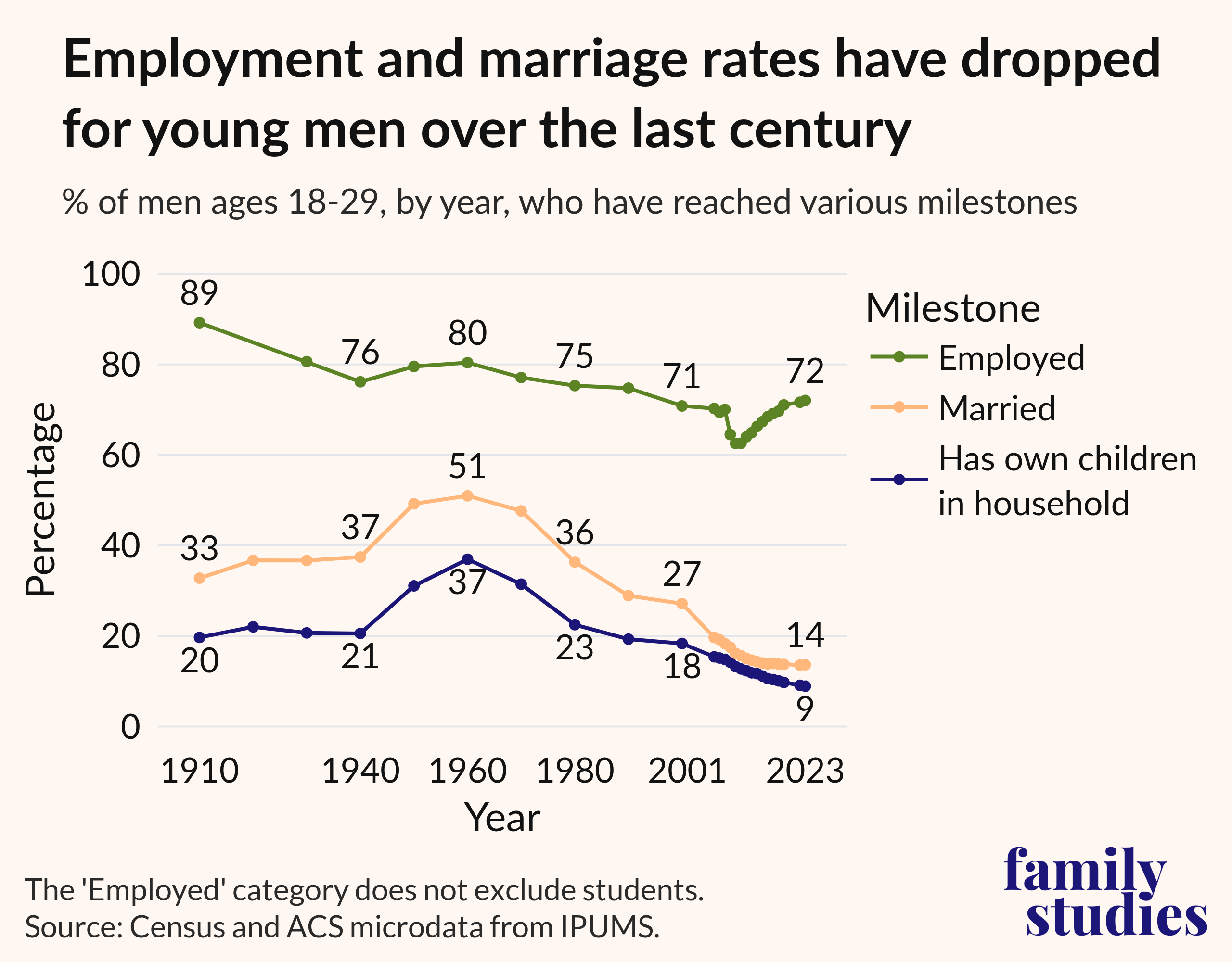
The findings by Cuevas and Horta Ribeiro suggest the limitations of prohibition. Efforts to reduce the allure of simulated intimacy and gamblified investing will need to be paired with efforts to make dating and savings easier and more satisfying.
The Feed
Gambling ads are widespread on YouTube
A new Campaign for Accountability report finds that gambling advertising is widespread on podcasts and YouTube. Reviewing 200 top YouTube and Spotify podcasts, CfA found that gambling sponsorships were especially common on male-centered shows. Of male-hosted shows with host-read ads, two-thirds had promoted gambling products in the last year—as had 83% of sports podcasts and 93% of podcasts hosted by male stand-up comics.
As we’ve featured in past digests, gambling advertising on YouTube serves as a major pipeline into risky behavior:
1 in 5 teenage boys and more than 1 in 3 Black teenagers say they use YouTube “almost constantly”, and 6 in 10 boys report seeing gambling ads on Youtube
Social Finance’s UK survey found that ads were the top source of exposure to gambling among young people, and that those who followed gambling content-creators were significantly more likely to participate in high risk investments (40%) versus those who did not (2%).
Last year, YouTube announced a policy of age restricting videos promoting online gambling—but exempted sports betting ads.
Most prediction market traders lose
A new working paper offers a clear look at who wins on prediction markets. Using more than 70 million trades on Polymarket, the authors find that the top 1% of users capture 84% of all gains, while 70% of users lose money. Users who concentrated more of their betting in long-shot contracts, and who traded more frequently overall, were more likely to lose money.
Americans widely support youth social media restrictions
Data from a new NORC survey finds that almost one in four Americans support restricting social media use for children under the age of 16. Concerns about social media age restrictions overwhelmingly center around implementation concerns: 65% cite young people turning to less trustworthy websites, and 58% cite the difficulty of enforcing restrictions.
David French on how tech has supercharged vice
In a recent opinion piece—and debate with Chris Christie—David French argues that sports gambling and pornography have become easier as opportunities have become harder:
If you want to watch porn or place a prop bet, the wind is at your back. If you want to go to college or start a business, the wind is in your face.
French notes that gambling and pornography are not new phenomena, but the frictionless ease with which they can be indulged today is.
What else we’re reading
How ‘Zombie Flow’ Took Over Culture - Derek Thompson
Are prediction markets good for anything? - Asterisk Magazine
Generation AI starts early: A guide to technologies already shaping young children’s lives - Brookings
Social media age restrictions for children: Why they are rising and what comes next - OECD
Prediction market giant Kalshi suspends congressional candidates over election bets - Politico
Where Does Our Free Time Go in Retirement? Too Often, It’s Social Media - WSJ
Teens’ Experiences on TikTok, Instagram and Snapchat - Pew Research
Roblox gaming platform reaches $12 million settlement with Nevada enhancing youth protections - AP
Events & Funding Opportunities
Young Futures Block Party | Austin, TX | May 13-14, 2026.
Young Futures Express Yourself Grant | Supporting bold solutions that help girls, boys and trans- and gender-expansive young people build confidence, belonging, and agency in a digitally shaped world. | Proposals due May 19th, 2026, 8 PM ET.
International Conference on Gambling & Risk Taking | Las Vegas, NV | May 26-28, 2026.
Young Guys Thrive | Online | June 12
*New* Request for Applications for Research on Sports Betting, Alcohol and Substance Abuse - Up to $437500 including indirect costs | Applications due July 17th, 2026
National Conference on Gambling Addiction & Responsible Gambling | Nashville, TN | July 22-24, 2026 | Call for presentations closed.
International Conference on Behavioral Addictions | Istanbul | August 24-26, 2026. Late registration open.
What did we miss this week? Do you have an upcoming conference or study we could feature in the next edition? Do you think under-18 social media restrictions would be effective? Let us know at bmonline@substack.com, or shoot me a message here.
If you haven’t already, please subscribe to stay up to date on Boys & Men Online.
And share!
Scott Baker et al, using bank and credit card data, found that households making deposits on sports betting apps made fewer deposits into savings and investments. We don’t yet have similar evidence for prediction markets, though presumably every dollar wagered on a prediction market at Robinhood would either be invested in a brokerage or automatically earn a default savings rate.
That’s not to suggest that porn is causing the dating recession; while researchers have studied the relationship between pornography consumption and divorce, we lack longitudinal studies of pornography use and relationship formation.