


The myth of male loneliness?
Over the past few months, we’ve seen a useful correction to the discourse about the so-called male loneliness epidemic.
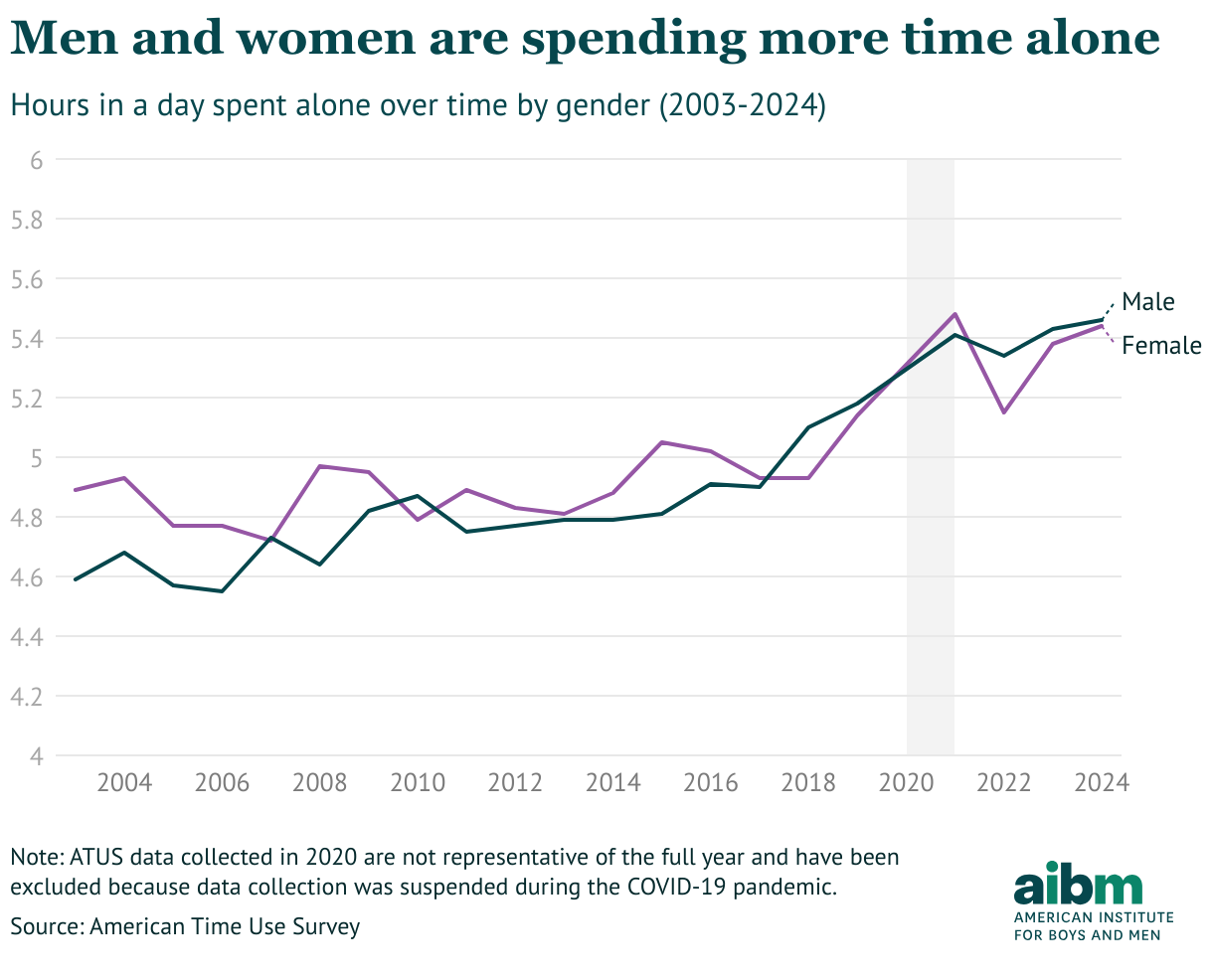
My colleagues Isaac Bledsoe and Ben Smith found that social isolation has increased among both men and women. In most surveys, young women actually report slightly more loneliness than young men.
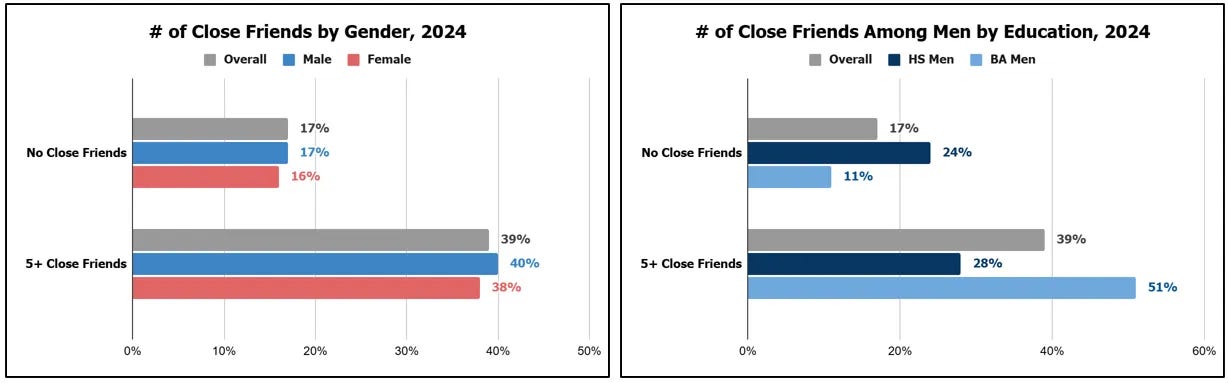
Sam Pressler notes that “the actual crisis of disconnection in America falls largely on the shoulders of men without college degrees.”
The statistical explanation is straightforward: Americans without degrees are significantly less connected to friends and community than their college-educated peers, and the vast majority of Americans without degrees are men.
Lakshya Jain at The Argument found that while men are indeed experiencing loneliness and social isolation, it’s young women under 30 who may be suffering the most, despite hardly any coverage of a female loneliness crisis.
Men and women both feel disconnected; the solutions may be different
The lesson here isn’t to ignore male disconnection. We ought to address disconnection for everyone, but how we cultivate social connection for boys and men may differ from what works for girls and women.
Kate Murphy is the author of the new book, Why We Click: The Emerging Science of Interpersonal Synchrony. In this conversation, we discuss:
Why the “loneliness epidemic” should be reframed as a challenge of connectedness
How men and women tend to seek and sustain social connections differently
Why simply telling men to “be more vulnerable” won’t necessarily lead to more or better friendships
But removing earbuds at the gym just might
The positive and negative effects of technology on our social lives
What it would look like to build a pro-connection society
In an upcoming post, we’ll share some ideas for addressing male disconnection specifically. We’d love to hear yours, too.


